Kitchens accumulate grease faster than almost any other room in the house. Between daily cooking, exhaust systems, and chimney ducts, a build-up of sticky, baked-on grease is practically inevitable over time.
When it comes to kitchen cleaning services, there are broadly two approaches to tackling this grease: traditional manual scrubbing with degreasing chemicals, or power steam-based cleaning. Understanding the difference can help homeowners in Faridabad choose the right kitchen deep cleaning approach for their needs.
The Traditional Scrubbing Approach
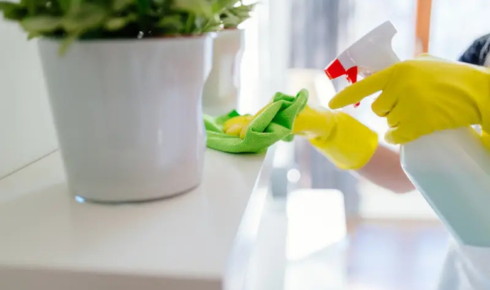
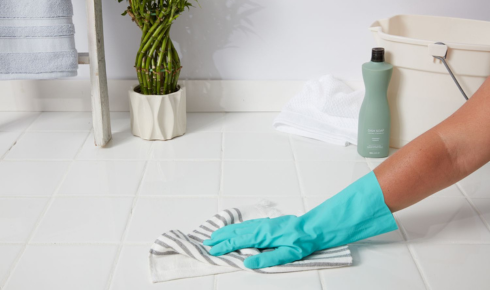
Traditional kitchen deep cleaning typically relies on chemical degreasers applied directly to greasy surfaces, followed by manual scrubbing with brushes or scouring pads to physically lift the grease away. This method has been the standard for years and can be effective, particularly on flat, accessible surfaces like stovetops and countertops.
However, traditional scrubbing has real limitations. Chemical degreasers strong enough to cut through baked-on grease are often corrosive and come with a sharp, lingering odour that can persist in the kitchen for hours. Scrubbing also requires significant physical effort and time, and it’s not particularly effective in hard-to-reach areas like the inside of a chimney duct, behind large appliances, or in tight corners around the stove.
How Power Steam Cleaning Works
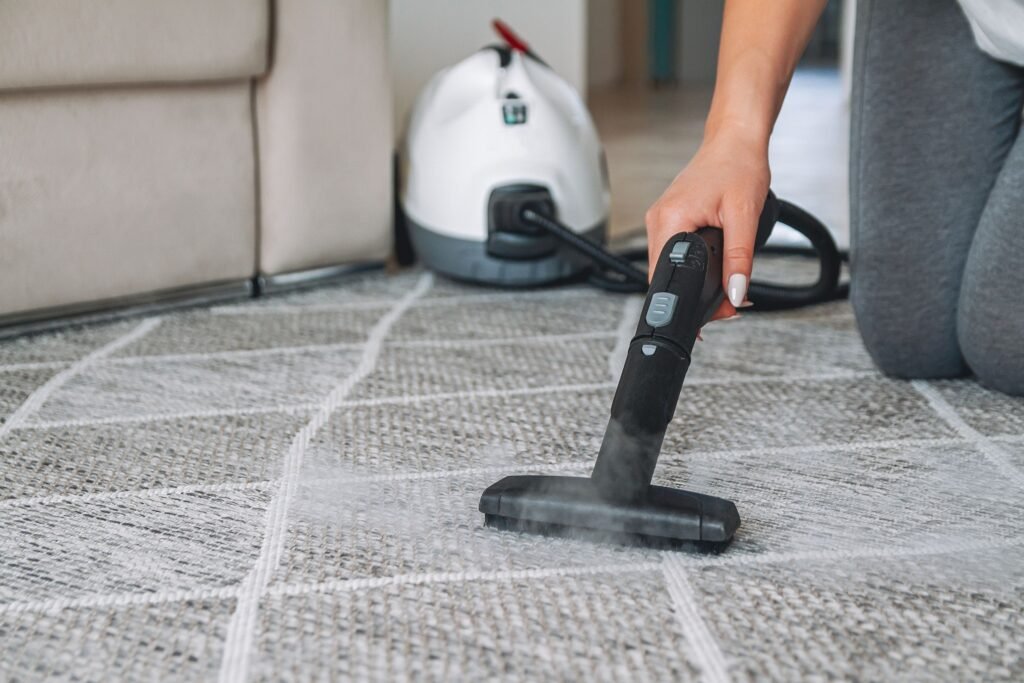
Power steam cleaning uses high-temperature steam, rather than chemical agents, as the primary method for loosening and lifting grease from surfaces. The heat and moisture from steam break down grease molecules effectively, allowing grime to be wiped away with significantly less manual scrubbing effort.
This approach has several advantages over the traditional method for kitchen cleaning services:
1. Reaches tighter, harder areas: Steam can penetrate small gaps and grooves that a scrubbing brush physically cannot reach, making it particularly effective for kitchen duct cleaning services, where grease accumulates in narrow interior surfaces of the exhaust system.
2. Reduces chemical dependency: Because steam does much of the work of loosening grease, less harsh chemical degreaser is typically needed, which reduces both fumes and the risk of chemical residue on cooking surfaces.
3. Faster overall process: Loosening grease with steam before wiping generally takes less time than repeated manual scrubbing with chemicals, particularly on heavily soiled surfaces like a long-neglected chimney or exhaust duct.
4. Gentler on surfaces: Steam-based cleaning is generally less abrasive on delicate surfaces like modern non-stick coatings, painted cabinet finishes, or glass hob surfaces compared to aggressive scrubbing, which can cause micro-scratches over repeated use.
Why This Matters for Kitchen Duct Cleaning Specifically
Kitchen duct cleaning services are often the most neglected part of kitchen maintenance, simply because ducts are hard to access and grease buildup inside them isn’t visible day-to-day. Left unchecked, accumulated grease inside kitchen ducts and exhaust systems isn’t just a hygiene concern; it can also become a fire hazard over time, since dried grease is highly flammable.
Traditional scrubbing methods struggle here because ducts have narrow, awkward interior surfaces that are difficult to physically scrub. Power steam-based degreasing is generally better suited to this task, since the steam can be directed into narrow spaces and grease is loosened without requiring direct manual contact with every surface.
Combining Both Methods for Best Results
In practice, the most effective kitchen deep cleaning services don’t rely exclusively on either method; they combine power steam degreasing for tough, baked-on, and hard-to-reach grease with targeted manual cleaning for finishing touches on visible surfaces like countertops, tiles, and stovetops. This hybrid approach tends to deliver a more thorough result than either method used alone.
Choosing the Right Kitchen Cleaning Approach for Your Home
When evaluating kitchen cleaning services in Faridabad, it’s worth asking specifically:
- Does the service use power steam degreasing, particularly for kitchen duct cleaning, or rely solely on manual scrubbing and chemical degreasers?
- What cleaning agents are used on visible cooking surfaces, and are they described as non-corrosive and low-odour?
- How often should kitchen duct cleaning be scheduled based on cooking frequency and duct accessibility in your specific kitchen layout?
- Does the provider address both visible grease (stovetop, tiles) and hidden grease (ducts, behind appliances) as part of a single kitchen deep cleaning session?
In Conclusion, the debate between power steam cleaning and traditional scrubbing isn’t really about choosing one over the other entirely; it’s about recognising where each method performs best. For stubborn, hard-to-reach grease, particularly inside kitchen ducts, power steam degreasing generally outperforms manual scrubbing alone, while still.